Leadership
Retail Leadership: What Great Store Leaders Do Differently

Great store leaders are not necessarily the loudest people in the building. They are not the ones doing everything themselves. And they are not waiting for corporate to fix every problem.
Strong retail leadership looks different.
The strongest retail leaders I have worked with understand something important:
The way they lead directly shapes the way the store performs.
Their teams know what matters.
They know what good looks like.
They know where they stand.
And they know their leader is paying attention.
That sounds simple. It is not.
After more than 30 years in retail, I have seen incredibly talented people struggle because no one ever really taught them how to lead a store.
They were promoted because they were strong sellers, dependable employees, or great operators. Then suddenly they were responsible for creating results through an entire team.
That is an entirely different job.
So what does great retail leadership actually look like?
1. They Create Clarity
Great leaders do not make their teams guess.
They are clear about:
- What matters today
- What great execution looks like
- What each person is responsible for
- What needs to happen next
This is especially important in retail because there is always something competing for attention.
Shipment arrives.
Someone calls off.
A customer needs help.
A fitting room needs attention.
Sales are behind plan.
Corporate sends another communication.
Without a strong leader, the store can spend the entire day reacting.
Great leaders bring the team back to the priorities that matter most.
Clarity creates focus. And focused teams execute better.
2. They Lead the Floor
Retail leadership cannot happen entirely from the office.
Great store leaders know what is happening on the sales floor.
They:
- See how customers are being greeted
- Notice whether associates are engaging or tasking
- Understand where traffic is converting and where opportunities may be walking out the door
- Coach in the moment
- Recognize great behavior when they see it
- Intervene when performance is not meeting expectations
The floor tells you almost everything you need to know about your store.
Great leaders spend enough time there to see it.
If conversion is inconsistent, start by looking at the behaviors happening on the sales floor. Learn more about how to increase retail store conversion rate.
3. They Coach Instead of Constantly Correcting
There is a difference between telling someone what they did wrong and helping them become better.
Great store leaders coach.
They:
- Ask questions
- Help people understand why something matters
- Give specific feedback instead of vague feedback
- Follow up
That last part matters.
A coaching conversation without follow-up is often just a conversation.
Great leaders return to what they discussed, notice progress, and reinforce the new behavior.
That is how development actually happens.
4. They Hold People Accountable Without Creating Fear
Accountability gets a bad reputation because some leaders only use it when something has gone wrong.
But strong accountability is simply clarity plus follow-through.
Great leaders:
- Establish the expectation
- Observe performance
- Address gaps
- Follow up
Their teams know that expectations matter because the leader consistently reinforces them.
That creates trust.
People know where they stand.
And poor performance is less likely to become the accepted standard.
5. They Understand That Customer Experience Is a Leadership Issue
Customer experience is not just a training module.
It is what happens in the store every day.
If customers are consistently ignored, that is a leadership issue.
If one associate gives an incredible experience while another barely acknowledges the customer, that is a leadership issue.
If the store feels energetic on Saturday and flat on Tuesday, that is a leadership issue.
Great store leaders understand that the customer experience reflects what they coach, recognize, inspect, and tolerate.
They do not simply tell the team to deliver great service. They help the team understand what that looks like in real situations with real customers.
Read more about what superb customer service looks like in retail.
6. They Know the Business
Strong retail leaders understand the numbers behind the store.
They know:
- Sales
- Conversion
- Average transaction
- Payroll productivity
- Traffic
- The behaviors affecting those results
But they do not simply report the numbers.
They connect performance to action.
For example:
If traffic is strong but conversion is weak, they ask what is happening with customer engagement.
If payroll is increasing without corresponding sales growth, they look at productivity and leadership.
If one day is strong and another consistently underperforms, they investigate what is different.
Great leaders turn numbers into decisions.
7. They Do Not Try to Be the Hero
One of the biggest traps in store leadership is becoming the person who fixes everything.
It feels productive.
It can even feel admirable.
But if the store only runs well when one exceptional leader is there, the store is not truly strong.
Great leaders build capability around them.
They teach.
They delegate.
They develop other leaders.
They create expectations that continue whether they are standing in the building or not.
The goal is not to become indispensable.
The goal is to build a team that can perform.
8. They Protect the Standard
Every store has standards.
The question is whether they are consistently upheld.
Great leaders do not allow small misses to quietly become the new normal.
They notice when recovery is slipping.
They notice when customer engagement is becoming optional.
They notice when follow-through is weakening.
They notice when the team has stopped doing something that once mattered.
And they address it.
Because standards rarely disappear overnight.
They erode a little at a time when leaders stop reinforcing them.
Why Retail Leadership Matters to Store Performance
The difference between an average store and a great store is rarely one dramatic thing.
It is usually the accumulation of leadership decisions made every day.
What gets discussed.
What gets coached.
What gets recognized.
What gets followed up on.
And what gets tolerated.
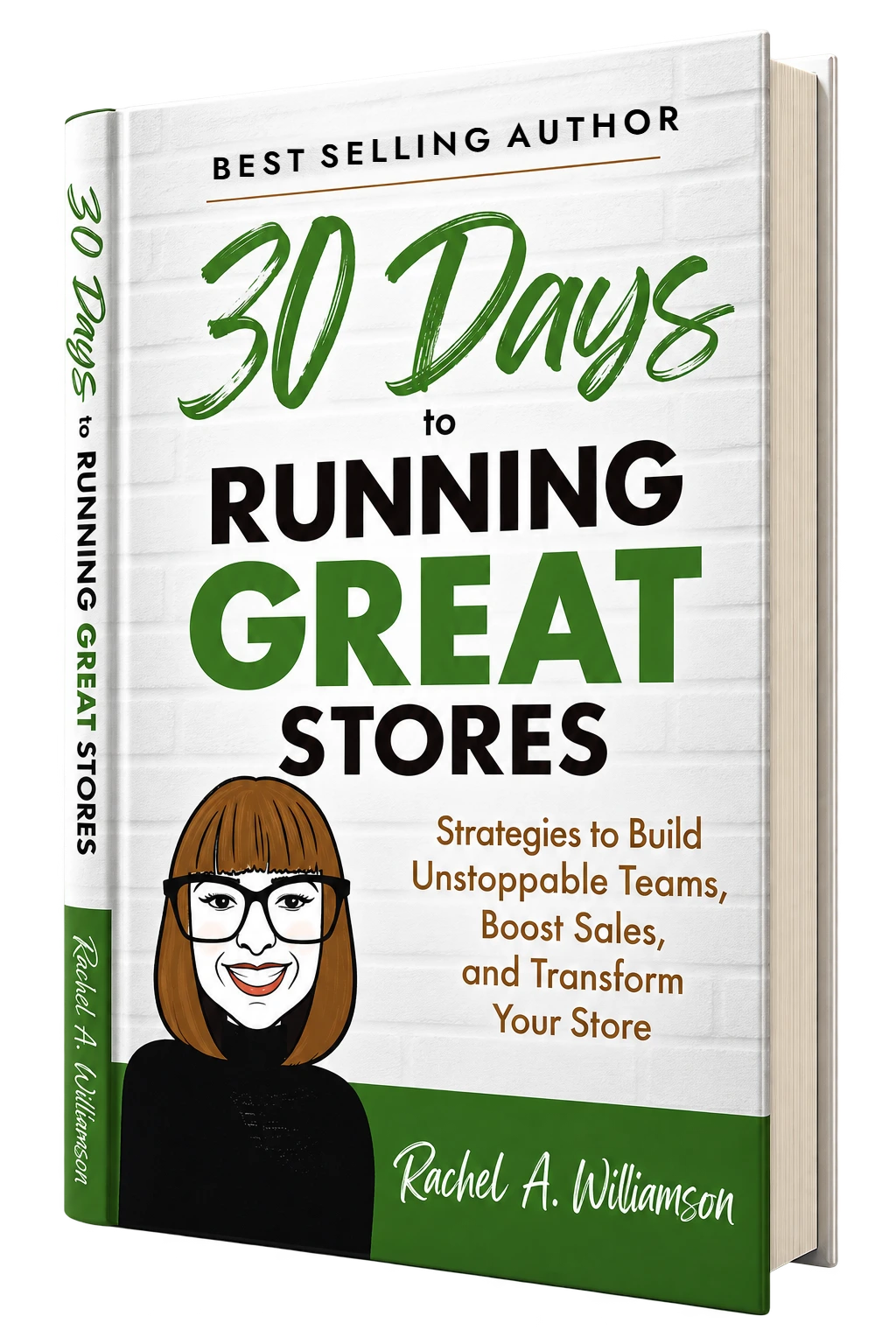
That is why I wrote 30 Days to Running Great Stores.
It is not simply a book about managing a retail store. It is a practical retail leadership framework for helping Store Managers, District Managers, and retail teams build the habits that create stronger execution, better customer experiences, and more consistent results.
Because great stores do not happen by accident.
They are led that way.
If you are developing store leaders across your organization, 30 Days to Running Great Stores can also be used as a practical leadership development tool with teams. Store Managers and District Managers can work through the principles together and turn each chapter into coaching conversations and actions inside the store.
If your challenge is bigger than one leader or one location, learn more about how I help retailers strengthen store performance, leadership, and execution.
Rooting for you,